
“Good morning. My name is Megan, and I am the student dentist who will be taking care of you today.”
As a dental student, encounters with new patients always excite me. There is truly nothing like the opportunity to meet patients and discover how I can play a role in improving their lives from a dental standpoint, which in turn impacts their total physical and mental well-being. Dental care’s impact on the rest of their medical care is never lost on me when patients come to see me.
On one particular day, my new patient came into the office scheduled for a comprehensive oral exam — one where we take a broad look at all of their teeth and gingiva and get a general impression of their future needs. However, something did not seem right when my new patient sat down in my chair. As I asked her how she was feeling, I realized that a general bird’s-eye view of her oral care was not exactly what her immediate need was. Instantly, as I asked how she was doing, she told me that she was having excruciating pain in her left lower teeth. Pointing at the place that hurt, it was clear that she had been living with this pain for quite some time now.
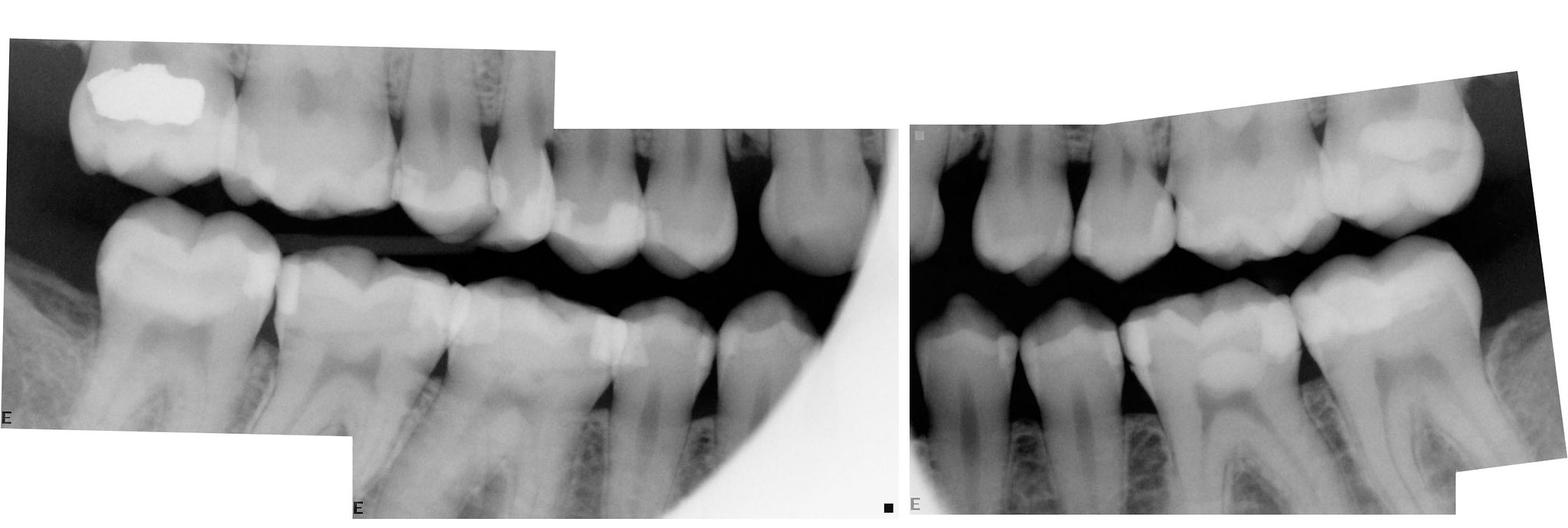
Thus, after getting a sense of the history of her symptomatology where we learned that this had been gradually worsening pain over the past few months, I looked to perform a focused physical exam. Using the traditional dental numbering system, it appeared that one of her lower left teeth — tooth 19 — had carious lesions (otherwise known as cavities). Upon x-ray, we saw decay and periapical radiolucency, indicating that this was undoubtedly an unhealthy tooth.
Upon shared discussion and decision making between my team and this patient, we decided that the best course of action to treat her overall symptoms and prevent long-term complications from having a decayed tooth, like an infection, was to remove that tooth. After extraction, my patient returned to our clinic two weeks later for an additional oral evaluation, where she expressed extreme gratitude for our help in relieving her pain. Afterwards, she asked if I would remain her dental provider since she felt heard for the first time and that her concerns were addressed.
The lessons learned from this patient’s encounter can be applied to the care of all future patients and, of course, can be applied in any clinical setting. Oftentimes, when a patient comes into our offices, we may have a vague idea of the reason for the patient’s visit. In dental-related fields, this may be a general cleaning or, in this case, a general evaluation of a patient’s oral health. This can be likened to a yearly physical when a patient sees a family medicine or internal medicine physician. However, in the case of this patient’s care, having a clinician who took the time to listen to her uncovered a more pressing clinical question that — without resolution — could have evolved into a source of infection that could have had dangerous clinical consequences that leave the realm of just dentistry and take a toll on her systemic well-being. Decay and pain are an easily fixed oral surgical problem; however, when untreated, sepsis can have truly devastating results.
This highlights the importance of listening to patients and hearing about their genuine concerns. Since this patient felt heard during her visit, she was eager to follow up with us again in the future, further improving her preventative health. While, of course, patients need to be heard for the sake of being heard, it is critical to remember that patients feeling heard in one patient encounter may increase their trust in our healthcare system.
It is important to note that it is imperative not to be “tunnel-visioned” based on one area of pain. “Distracting injuries” or illnesses can also lead to biases that can prevent thorough diagnoses. However, while providing well-rounded patient care, this must be balanced with listening to existing symptoms and investigating those causes. This patient did indeed return for that needed exam of all of her teeth and gingiva. However, by then she knew that we had her best interest at heart, and she knew that any subsequent interventions she needed would be from a place of preventing future pain like the pain she previously experienced.
For most patients, hearing that they need any surgery is scary. As many people simultaneously find the dentist’s office an unpleasant and scary place to be, this synergy requires delicate care. Providing a space where patients feel heard and on the same team as their providers will help break down the existing barriers. This comes with taking the time to listen to one’s patient, validating their concerns, and investigating those concerns — even if that was not the reason for that patient first stepping foot in your office in the first place.
Image credit: My Teeth (CC BY 2.0) by Paul Irish

Resident Physician Contributing Writer
Thomas Jefferson University Hospital
Dr. Jennifer Geller is a general surgery resident at Thomas Jefferson University Hospital in Philadelphia, PA. She completed medical school at Rutgers Robert Wood Johnson Medical School with distinctions in bioethics and medical humanities and during that time served as both Managing Editor and later Editor-in-Chief of In-Training. She is a graduate of Brandeis University with majors in Biology and Chemistry. In her free time, Jennifer enjoys baking, hiking and spending time with friends and family.

Guest Writer
University of Pennsylvania School of Dental Medicine
Megan is a dental student at the University of Pennsylvania School of Dental Medicine in Philadelphia, PA class of 2026. After graduation, Megan is pursuing a post-doctoral certificate in Orthodontics at CTOR Academy. In 2022, she graduated from Brandeis University with a Bachelor of Science in biology. She enjoys try new restaurants, taking walks around the city, and learning to ice skate. After graduating dental school, Megan would like to pursue a career in dentistry that creates inclusive dental care for those with developmental and intellectual disabilities.