
Finding My Frequency
Fellow physician Dr. Holly Ingram discusses her hearing loss and its effects on her medical training.

Fellow Physician
Prisma Health
Holly Ingram is currently a Developmental-Behavioral Pediatrics fellow at Prisma Health in Greenville, South Carolina. In 2016, she graduated with a Bachelor of Science in biology with minors in chemistry and anthropology from the University of North Carolina at Chapel Hill. She obtained her MPH from East Carolina University, and in 2022 graduated from Brody SOM with her MD. She completed her pediatric residency in 2025 at Wake Forest SOM in Winston-Salem, North Carolina. In her free time, Holly enjoys playing soccer, visiting waterfalls, and spending time with her daughter and husband.
Fellow physician Dr. Holly Ingram discusses her hearing loss and its effects on her medical training.
As a program director, I am worried about my trainees who are already challenged with the usual stressors of graduate medical education (GME). This new illness is threatening to upend and disrupt our program in ways that I cannot even imagine, and therefore cannot plan for.
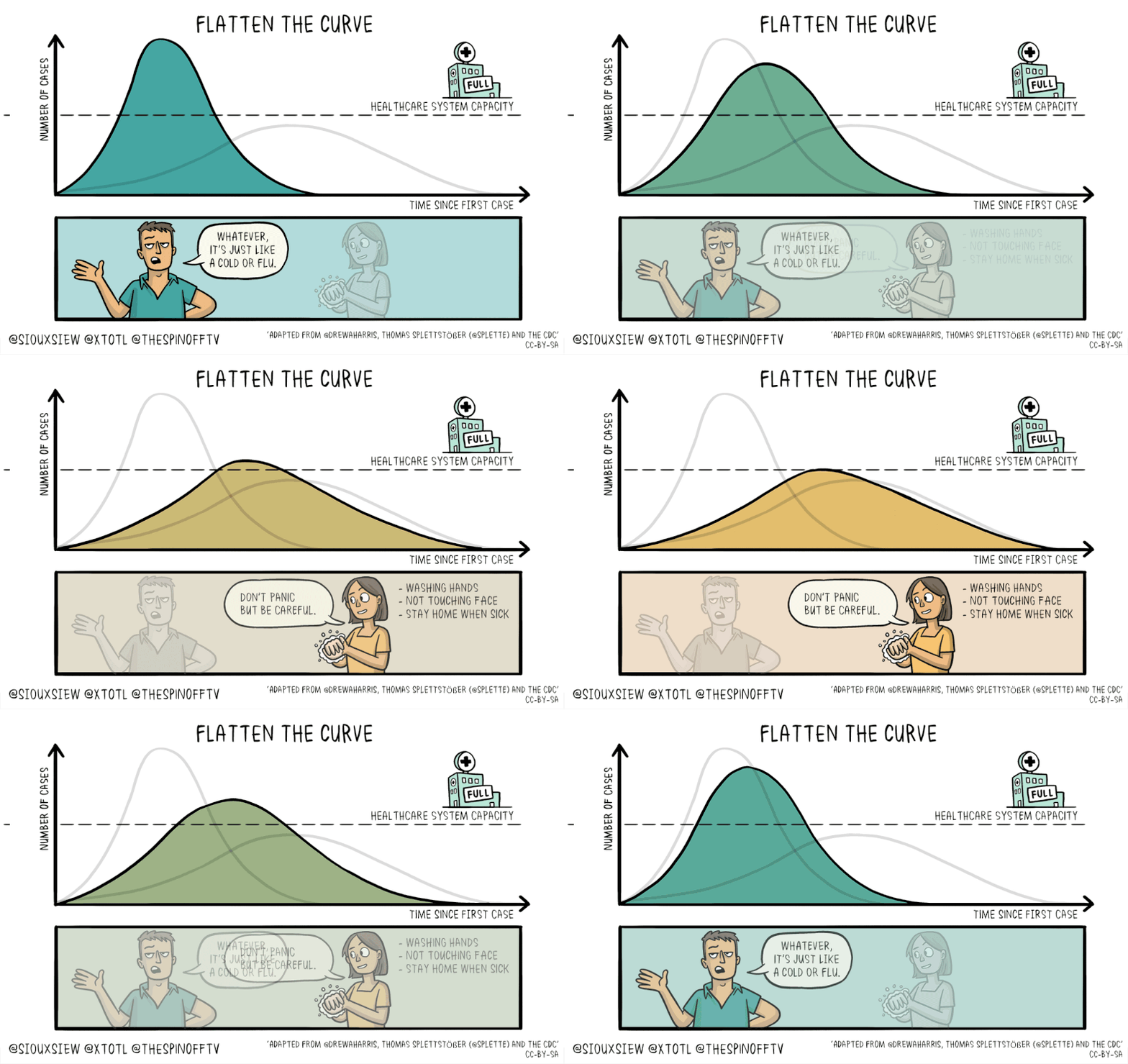
The other day at work, there were a few employees that were unnecessarily spreading panic on a message board by comparing the novel coronavirus COVID-19 to the infections mentioned in Jared Diamond’s book Guns, Germs and Steel — one commenter wrote that “every once in a while in history an infection comes along like this.”
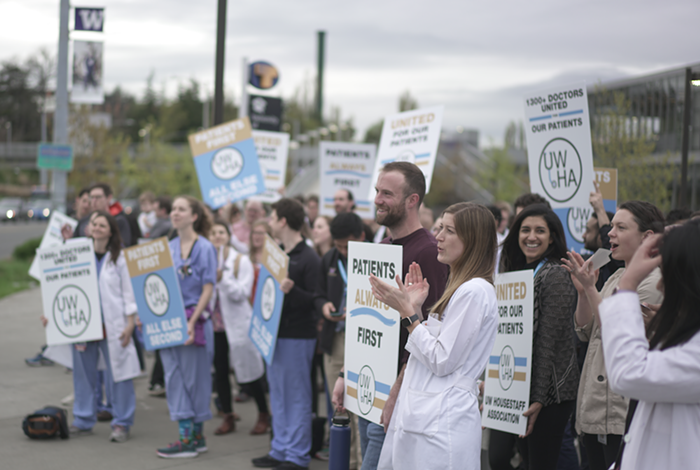
On September 25, the resident physicians and fellows at the University of Washington (UW) participated in a “strike.” It lasted only 15 minutes, because above all else, they are physicians putting patient care first. So, why are they striking?
I am very pleased to welcome you all to a new academic year at the esteemed institution at which you find yourself, perhaps somewhat unexpectedly, thanks to the Match. Late June is always somewhat bittersweet, but it is a simultaneously exciting time in the academic year.
I remember feeling resentful that he seemed too healthy to have come to the ER in the first place, while I, on the other hand, was shuffling around as if walking ankle-deep in wet cement, dead tired and longing to stretch out on the gurney in the adjoining cubicle.
Until the past several years, research funding had failed to outpace budget cuts, sequestration, and inflationary losses, prompting prospective physician-scientists to avoid careers in academic medicine. According to Mark A. Krasnow, MD, PhD, a Howard Hughes Medical Institute (HHMI) investigator and professor at Stanford University School of Medicine, the key to success is in identifying novel scientific avenues that will attract funding as opposed to focusing on the funding itself.
Overwhelmed and exhausted, a resident recently came to me to ask, “Can we do something about call?” Defeat and despair had taken over his psyche. He felt unable to cope with the tasks of residency, including the seemingly never-ending demands of fielding consults, pages and patient needs. He imagined that the problem could be solved by taking less overnight call.
During my third year of residency, I remember getting calls from the recruiters trying to solicit me for locum tenens work. Sometimes I would get paged from an out-of-state number and learn it was yet another staffing company’s cold call.
Now that you, the reader, have become house staff, the time has come to change your mindset from one of competition to one of collaboration with your peers. The path that leads to achieving the MD or DO degree is one of often single-minded pursuit of academic victory. The competition has been fierce.
One of the trickier things to learn as a young doctor is how to navigate boundaries between patient, doctor, family and friends. Medical school teaches us that it is unethical to treat yourself or your close family due to a lack of objectivity that can affect judgement. It is fairly obvious why doing otherwise can create poor medical care due to blind spots created by subjectivity, hope, selective listening, personal agendas, and bias for a certain approach to treatment.
Medical training and practice exposes us simultaneously to the beauty and tragedy of life. As a resident, you are thrown into a strange world in which death will often sit as an unwanted companion in the room with you and your patient.

Attending Physician Guest Writer
Geisel School of Medicine at Dartmouth
Dr. Ronan is an associate professor of neurology and medicine at the Geisel School of Medicine and is the program director of the Dartmouth-Hitchcock Neurology Residency.
Practical Wellness: Perspectives from a Program Director
A program director's perspectives on practical wellness in residency and how graduate medical education leadership can facilitate housestaff resiliency and self-advocacy.