Internal Medicine

Ella Mae I. Masamayor, RN, MD (1 Posts)

Fellow Physician Contributing Writer

Philippine General Hospital


Dr. Masamayor is diplomate in internal medicine and current endocrinology fellow at Philippine General Hospital (UP-PGH).


How Mother Dog Welcomed Me to Residency

I was up before dawn, dressed in the comfiest, most adult-looking outfit I owned: a blue-and-white floral blouse, flared maroon pants, and navy walking shoes. After enduring an intense 200-point exam, two grueling weeks of pre-residency (think of it like a two-week job-interview-slash-free-trial), and countless days of calming myself down, it’s time for the real ordeal: my first day of internal medicine residency training.
What Are You Going to Do When You Grow Up? My Slither of Hope

It is very difficult to believe that I am already more than halfway done with residency at this point, and that it is time to figure out what I want to do after these three years are up. Once again, what’s surprising and different to me is the structure for training in the United States: having to apply at the end of year 2 for a fellowship that will start after year 3, seems so early, but I am learning to accept that these are the American ways.

Surviving Residency When Your Fiancé Has Cancer: Part 3

The second week of September was the epitome of emotional whiplash. Monday the 12th, we celebrated our one-year engagement anniversary in the ICU. We had gotten engaged in an apple orchard, so I brought in apple cider and cider donuts. She still wanted to keep fighting and didn’t want her doctors to give up on her. She was on four mcg/min of norepinephrine to keep her blood pressure up.

Surviving Residency When Your Fiancé Has Cancer: Part 2

I had just started my residency in Burlington, Vermont when she started having symptoms again. She was to receive her treatment in Rochester, New York, which meant we were apart most of the year. I had been planning to propose in October, but now all plans were out the window. Despite the fear that swelled inside, I made sure to propose before she started chemo, to show that I would be with her no matter what.

The U.S. Medical System as an IMG: My Path

In my last installment, I mentioned I would like to write about my process of getting into a residency program in the United States. As soon as I promised this, I remembered the number of steps involved, so please forgive me if I forget to mention something. The path has substantially changed since COVID and differs greatly by individual circumstance. What made the whole process so confusing was having to create multiple accounts and profiles for multiple websites; the next step was often unclear until I called the Educational Commission for Foreign Medical Graduates (ECFMG) and explicitly asked for instructions.

Surviving the First Month as an IMG Resident

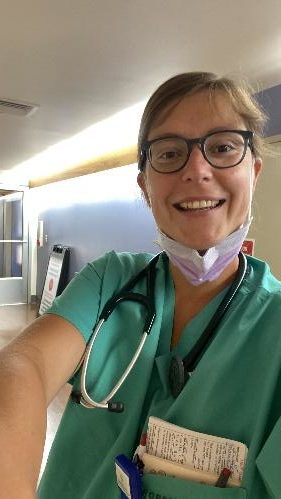
Let’s start with a very brief introduction: Hello! My name is Aline, and I am an international medical graduate (IMG) from Germany. I used to work in Germany in internal medicine, where I have completed four out of five years of training. I would like to share my experiences, thoughts, and later also some of the processes and steps that got me here over the course of this new column.

Along the Road: A Perspective on Medical Training in a Pandemic

It feels odd to have family members in the hospital regularly again. My patient’s wife approaches cautiously; for a second I pretend not to see her. She looks like she wants to talk and I’m afraid she wants good news I can’t give, promises I can’t make, and time I don’t feel like I have. She wants time to tell me her loved one’s stories.

Early Palliative Care and End-of-Life Planning as a Primary Preventative Intervention During the COVID-19 Pandemic

The novel coronavirus pandemic (COVID-19) has drastically increased the number of critically ill and dying patients presenting for hospitalized management of dyspnea, acute respiratory failure and other serious complications. The emergence and spread of SARS-CoV-2 has created unprecedented demands on all avenues of inpatient hospitalist medicine. One of the many services in high demand includes palliative care, with increased need for complex end of life planning.

Internalizing Medicine: Starting Intern Year in the Time of COVID

In my home city of Washington, D.C., citizens have taken the changes brought on by COVID-19 very seriously; social distancing, masking and frequent hand hygiene are now routine. These days, I am startled when I see the bottom half of someone’s face out in public. Our homes have become our sanctuaries. In the hospital, however, much of our work continues unabated. Orders are written, notes are signed, lab work is drawn, imaging is performed. Housestaff are on the front lines with nurses, respiratory therapists and patient care technicians taking care of the sickest patients day-in, day-out.

Keanan McGonigle, MD, MPP Keanan McGonigle, MD, MPP (1 Posts)

Resident Physician Contributing Author

George Washington University School of Medicine and Health Sciences


Keanan McGonigle is a PGY-1 in internal medicine at George Washington University. He plans to go into primary care and has particular interests in geriatrics and HIV medicine. Dr McGonigle is a 2019 graduate of Tulane University School of Medicine and spent a year working in public policy and medical student advocacy before starting residency.