
Third year feels different.
Intern year taught me how to work. Every note, every consult, every long night sharpened the mechanics of patient care. You learn to move efficiently, anticipate needs, and steady your hands when everything feels new. It is a year of doing, of survival, of quiet endurance.
Second year taught me something else entirely: responsibility. Not just responsibility for patients, but for the interns looking to you for guidance. You are no longer only learning; you are shaping how others learn. Leadership is not about authority; it is about presence, about knowing your team, knowing yourself, and creating a space where people can grow and do their best work. You can demand excellence while providing safety, and the balance between the two defines the culture you cultivate.
Third year shifts more quietly, almost imperceptibly at first. You begin to think like the physician you will soon become. You watch the attendings — how they listen, how they reason, how they navigate uncertainty. Each has a style uniquely theirs. Some work systematically, step by step. Some tell the story first, letting the narrative guide the logic. Some pause in silence, letting reflection carve the next move. You watch, you learn, and slowly begin to understand what it means to shape a style that is truly yours.
The roots of my philosophy stretch back to Omaha, Nebraska. During my first year of medical school, I worked with a primary care physician whose patients drove forty minutes just to see her. She was brilliant, but her brilliance was quiet. What struck me most was the way she connected with people. She knew their families, their worries, their habits, the details that never appear in a chart. Watching her, I realized that medicine is not only about diagnoses; it is about the person who carries the disease. It is about listening, noticing, and valuing the story behind the numbers and labs.
Even before residency, I found inspiration in unexpected places. While still in medical school, I saw Dr. Gurpreet Dhaliwal, a master diagnostician, work through a complex patient story in front of a packed lecture hall. The remarkable part was not the answer itself; it was the process. His curiosity, patience, and humility as he untangled the problem left a mark on me. I have carried that approach to Baltimore, trying to see patterns in the noise, to build diagnoses from first principles, and to embrace the uncertainty that makes medicine as much art as science.
Across these three years, I have realized something essential about myself. I admire physicians who think deeply, and I admire those who make patients feel safe. The best lead with both. I want a mind that can untangle the complexity of disease and a heart that can hold the complexity of the person before me. Intelligence alone feels insufficient. Warmth alone feels incomplete. Medicine demands both, and patients deserve both.
Residency at Hopkins Bayview has reinforced this daily. As a second-year Junior Assistant Resident (JAR), I learned that leadership is not about directing traffic, but about knowing your team. Listening to interns, offering feedback that encourages growth, praising effort, and holding people accountable with care, while maintaining a safe environment in which everyone can thrive, became my guiding principle. Respecting the people you rely on, especially nurses and staff, is critical. Most problems are solved not through a message or a chart note, but by walking over and talking face-to-face. Those moments build trust. Trust builds teams.
Residency has also taught me the subtle power of inspiration from afar. I have never met Dr. Randy Barker or Dr. John Burton, yet walking through the halls of our primary care practice, affectionately called RBMG and named after Dr. Randy Barker, I feel connected to them. Sometimes, I literally walk a lap around the clinic as inspiration for my own practice, thinking: What would Dr. Randy Barker do? How would Dr. John Burton approach this problem? On the inpatient side, when confronting a diagnostic dilemma, I pause and ask myself: How would Dr. Gurpreet Dhaliwal think about this? You do not need to meet someone to learn from them. Their curiosity, humility, and courage to challenge the status quo shape how you approach patients, problems, and your own growth.
As I prepare to stay on as an attending at Johns Hopkins Medicine, mostly as an outpatient general internist and primary care doctor, I am deliberate about the kind of physician I want to be: curious, compassionate, thoughtful, and guided by the belief that medicine is a responsibility to those we serve, and that the truest care comes from understanding the person who entrusts you with their story.
If intern year taught me how to work, and second year taught me how to lead, third year is teaching me how to become the physician I once hoped I could be.
A doctor who thinks deeply.
A doctor who listens well.
A doctor who sees the patient before the problem.
A doctor who keeps growing.
It has been a privilege to learn this craft. And the most humbling part is knowing that the learning is only beginning.
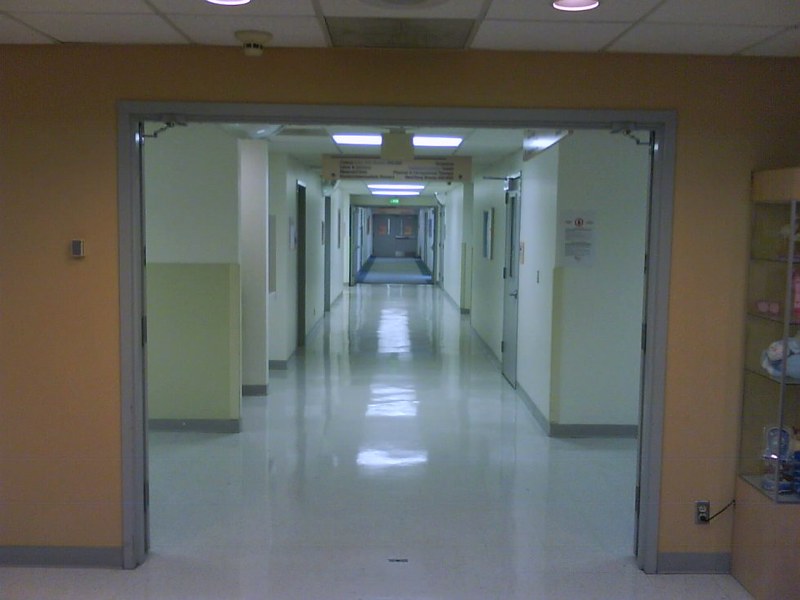
Image credit: Hallway (CC BY-NC-ND 2.0) by Brave Heart
Contributing Writer
Johns Hopkins Bayview
Sagar Chapagain, MD is an internal medicine resident physician in the General Internal Medicine/Primary Care track at Johns Hopkins Bayview Medical Center. A Jack Kent Cooke Scholar, his written work on health policy, health care disparities, and higher education policy has been featured in national and regional publications. Follow him on LinkedIn for updates.