
I was up before dawn, dressed in the comfiest, most adult-looking outfit I owned: a blue-and-white floral blouse, flared maroon pants, and navy walking shoes. After enduring an intense 200-point exam, two grueling weeks of pre-residency (think of it like a two-week job-interview-slash-free-trial), and countless days of calming myself down, it’s time for the real ordeal: my first day of internal medicine residency training.
Residency training is more commonly known in the Philippines as “specialization,” which is actually less confusing than the term “residency.” I am indeed specializing in internal medicine, which, after completing medical school and grabbing my license, I chose to care for adult patients while my colleagues pursued pediatrics, obstetrics, or surgery. They call it residency because residents practically live in the hospital, hounded by work around the clock. It’s both education and employment, and this was my first job after graduation, a job I’ve dreamed of for so long. I have to make a good impression — I don’t want to mess this up.
It’s five in the morning, pitch black except for the dim light of condominium lobbies and rare street lamps. Probably too early, even for the first day of work, but I didn’t want to take any chances. As I set foot on the street, to my horror, a stray dog appeared out of nowhere, barking with fury. It was one of those askals (asong kalye, or street dogs) along Padre Faura, the kind that didn’t have an owner but had always called the streets home. I vaguely remember seeing her in the daylight, but never like this. The street was empty, but I felt I had no way out. The dog — Mother Dog, as I came to call her — barked and barked, not stepping forward but not backing down either. My mind went blank. I had to get to work, but I also did not intend to die.
To help you understand my terror, let’s talk about my history with dogs. I was never a kid who grew up with pets. I’ve always wanted a dog, but my mom was never a big fan of them. She disliked them ever since a dog bit through her favorite dress as a kid. The only time I ever had a dog was when I had Scooby, a black-and-white aspin that we brought to Manila from Siquijor, my mom’s hometown. Scooby was a gift from one of our neighbors, and Mommy somehow agreed to take him home. Scooby was an energetic little pup who would jump at me as I came home from school. Mom never liked that. She felt like the dog was attacking me with every leap. She was never comfortable with having a dog in the house, and eventually decided to give Scooby to her boss.
She didn’t have the heart to tell me that she gave Scooby away, though, so she did the next best thing: she lied and pretended that Scooby had gotten away in the middle of the night. I was devastated, so much so that I marched down to our apartment’s security guard. I asked him if he was on duty last night, or if he had seen a black and white dog sneaking out a door or window. When he said no to both questions, I gave him an earful about how he let my only puppy go away.
Let this be my public apology to Kuya Security Guard. Believe me, I had no idea.
I never had a dog again. I only ever encountered the dogs of neighbors and friends, and somehow, I was always apprehensive of them. I’m unsure if it’s my mom’s fear rubbing off on me, if I was traumatized from losing Scooby, or if the dogs I met were particularly aggressive, always barking ferociously at visitors. During our college community rotation in Batangas, a dog chased me and my blockmate through the woods, with only a sturdy umbrella to protect us. I was saved, not by the umbrella, but because the dog had given up, probably convinced that we weren’t worth the chase. I’ve never had much luck with cats, either. In college, while I enjoyed my one-hour lunch break with a grilled chicken drumstick and rice — a treat I hardly allowed myself — a black pregnant cat lunged at my plate, taking my lunch for herself. She did not bother to wait until I got the hint to feed her or take my food when I wasn’t looking. I sauntered to my 1 p.m. math class hungry and shell-shocked.
Suffice to say, I haven’t had the best relationship with animals — not because I didn’t like them, but because, historically, they did not seem to like me.
So there I was, face-to-face with Mother Dog. The dog was rather old, with off-white fur common to many askals. I knew she was female from the nipples hanging under her belly. She stood her ground, like Gandalf refusing my passage. Her piercing barks broke the eerie silence of dawn. I, on the other hand, remained frozen. Every time I tried to take a step, her eyes grew more vicious, her barks even louder. In her head, she must have thought I was out to attack her. In reality, I just wanted to get to work unscathed, but I did not know how to communicate that to a dog. I was panicking. What was I going to do? I was already losing precious time playing early-morning patintero with her.
I did the only thing I could: call for help. I walked about ten steps back to our condominium lobby, calling our security guard. “Kuya, Kuya, tulong!” Our building security guard heard my plea and rushed to where I stood, ready to tackle an armed robber or a formidable creep. To his relief-slash-disappointment, I pointed at Mother Dog and meekly replied, “Kuya, ‘yong aso po.” The dog. It’s the dog!
Kuya Guard was baffled, unsure how to respond. He was probably considering how serious I was and if all he truly needed to do was tell the dog to scram. Thankfully, he did that anyway. At the sight of Kuya Guard, Mother Dog stopped barking, but she maintained her claim on her spot. Kuya Guard stood nearby, encouraging me to move forward.
I took a step, and miraculously, Mother Dog did not stir. I took another step. Then another. I was terrified. What if she jumped at me as our paths crossed? What if Mother Guard was too quick and ruthless for Kuya Guard to handle? What if she chased me to the hospital? With short legs and a 5K personal record of 45 minutes, I knew Mother Dog would certainly outrun me.
It took about five minutes to walk from our building to the hospital’s employee entrance, but those few moments with Mother Dog and Kuya Guard felt like an eternity. I knew I couldn’t waste any more time. Scared as hell, I kept walking, quickening my pace but careful not to invite a chase. I looked at Kuya Guard again, who said, “Sige, lang, ma’am!” Go on. You can do it!
And do it, I did.
As I brisk-walked away from the horrific (but in hindsight, comedic) scene, I thought about how this entire debacle was a bad omen. What if Mother Dog were an ancient spirit meant to warn me of the ills to befall me once I commence residency training? What if she were communicating a message my unevolved human ear could not understand? This happened way before dawn, and I’ve been taught that nothing good ever happens before the sun is up.
As overthinkers are wont to do, I spiraled even further. I questioned why I even applied to residency. Am I even cut out for this job? Did I get in on pure luck and familiarity? Even if I did qualify for the program, what if I eventually regret it? What if I find, after three years of work and sacrifices, that I’m not where I’m supposed to be?
I did not have answers to these questions, and I still don’t have them, even after completing residency training. The questions and thoughts certainly crossed my mind, but I never found the answer. I didn’t have time for them, anyway. I came to work day after day, saw patients one after the other, and before I knew it, residency was over.
Does that mean I ever stopped being scared? Hell no. The uncertainty, though it waxes and wanes, never truly leaves. Perhaps I’ve gotten better at hiding it. Or maybe, the real lesson was to do it anyway. Despite the fear, the trepidation, the impostor syndrome. We do it scared. We do it anyway.
Maybe that’s what Mother Dog was trying to tell me. Maybe she really was an oracle from beyond, not to scare me off, but to deliver this: there will be days when I come unsure, anxious, and terrified, with a beast metaphorically at my heals, but if I still believe in what I came here to do, I can keep going. I have to keep going.
Granted, this is a very simplistic resilience story. Life is more complex and nuanced than a barking dog as a metaphor for life’s challenges. Not everything can be solved, but when I need another reason to go on, this story does offer encouragement in the right places.
And just as I had Kuya Guards to call, that day taught me that I could always ask for help. Residency would teach me that needing help was not a sign of weakness. It takes strength to recognize that you need help, and even more to ask for it. But help is available, and it comes in many forms. Sometimes, help is a hand that walks you through your tasks or a guiding senior who tells you what you need to do. Help is a colleague who lends you their notes or offers to wake you up when you snooze your alarm. Help can also be a voice cheering you on, or a Kuya Guard saying you can do it. We are creatures of pride; we persist in doing things ourselves, but humans truly flourish when we work interdependently. Help is not only available, but is necessary for survival and growth.
I haven’t seen Mother Dog in a while. I’m not sure if she’s still alive, if she transferred to another street, or if she finally moved in with an owner. But I no longer think of that morning with her as a bad omen. I think of her as my real-talk welcoming committee, someone kind enough to acknowledge that residency, as with life, isn’t easy, but still showing me that it was possible to pass through, and that help is there when I need it.
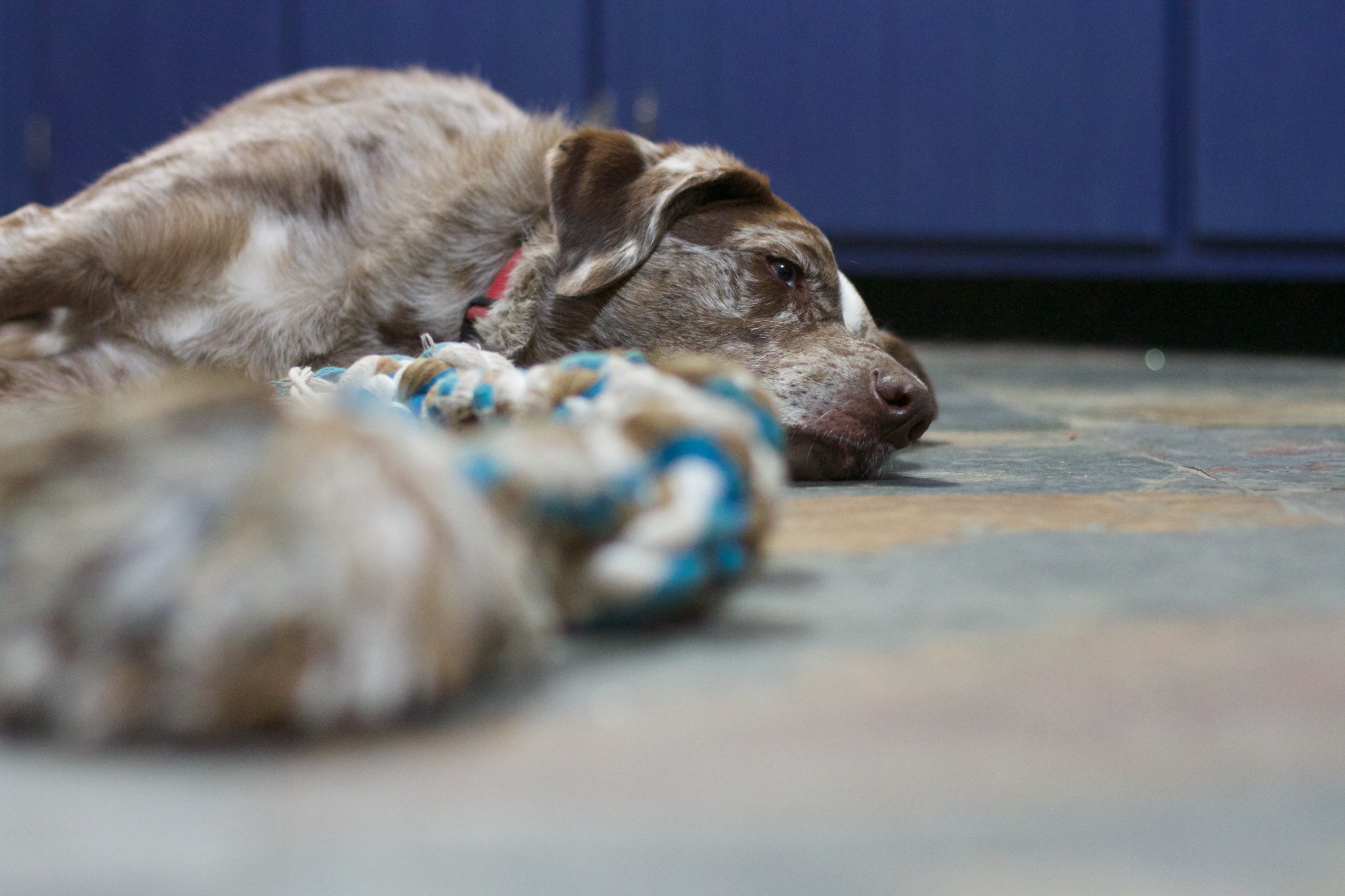
Image credit: What Dogs Dream About (CC0 1.0 Universal) by Alan Levine

Fellow Physician Contributing Writer
Philippine General Hospital
Dr. Masamayor is diplomate in internal medicine and current endocrinology fellow at Philippine General Hospital (UP-PGH).