

Another Day, Another Code
“Code Blue, lobby bathroom,” the loudspeaker goes off. For a second we all look up from our workroom computer screens. A seasoned resident shrugs his shoulders and we share a knowing look.

Resident Physician Contributing Writer
Boston University School of Medicine
Divya is a second-year internal medicine resident at Boston Medical Center in Boston, MA. She received her BA in Medical Sciences with a minor in Journalism at Boston University and subsequently completed her MD at Boston University School of Medicine. She is passionate about health equity, working with underserved populations, and critical care medicine.
“Code Blue, lobby bathroom,” the loudspeaker goes off. For a second we all look up from our workroom computer screens. A seasoned resident shrugs his shoulders and we share a knowing look.

The recent confirmation of Brett Kavanaugh to the United States Supreme Court raises concern about the future of reproductive health, particularly access to abortion and affordable contraception. Although his impact on reproductive rights is to be determined, those who will be disproportionately impacted by further compromise of reproductive rights will always be the most vulnerable women among us. This includes the uninsured, poor, and incarcerated.

The baby’s hat is bright orange, knit with vertical ribbing to mimic a pumpkin’s ridges, and topped with a tiny green stem. The cheeks below it bulge in perfect crescents. I turn to the mother to ask if she made the hat herself. Her eyes don’t leave the muted cartoons bouncing across the television screen as she mumbles, “The nurse or someone gave it to her.”
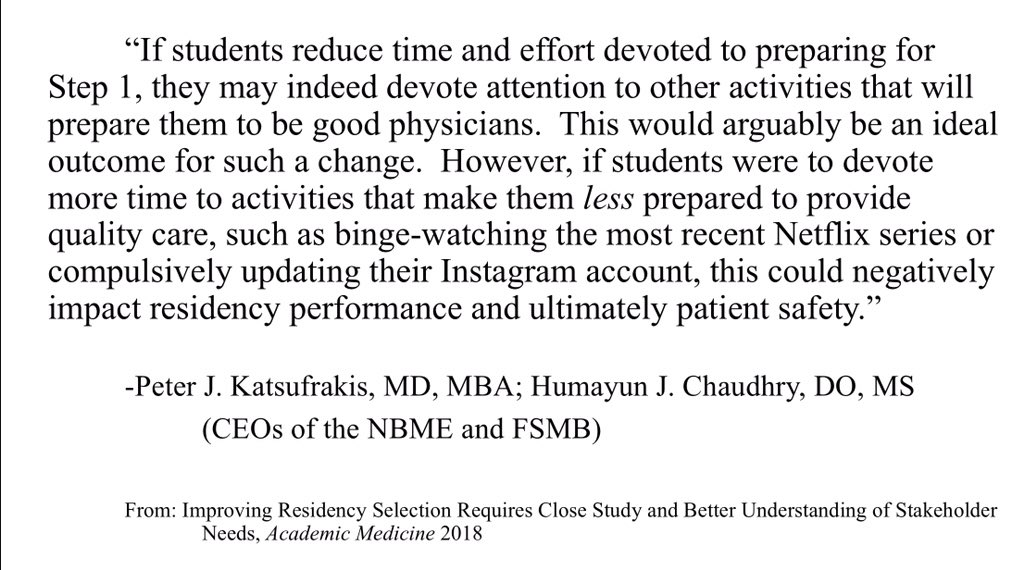
The recent ruminations of Drs. Katsufrakis and Chaudhry in the form of an invited commentary in Academic Medicine, entitled “Improving Residency Selection Requires Close Study and Better Understanding of Stakeholder Needs,” has garnered a significant amount of attention on Twitter. Drs. Katsufrakis and Chaudhry’s commentary was in response to a well-written and well-reasoned article by a group of medical students published in the same journal recommending the USMLE Step 1 transition from a numeric score to pass/fail.

Now that you, the reader, have become house staff, the time has come to change your mindset from one of competition to one of collaboration with your peers. The path that leads to achieving the MD or DO degree is one of often single-minded pursuit of academic victory. The competition has been fierce.

In 1999, the American Board of Internal Medicine and Association of Program Directors in Internal Medicine defined a “problem resident” as a “trainee who demonstrates a significant enough problem that requires intervention by someone of authority, usually the program director or chief resident.”

For children who have been reunited with their parents, though, the damage may have already been done. Let’s discuss some of the key consequences associated with parental-child separation in detail, starting with the notion of toxic stress.
twenty-two nights you kept me awake. i counted / them last night, counted them as i lay on my bed with / eyes propped open, trying everything i could to
Medical training and practice exposes us simultaneously to the beauty and tragedy of life. As a resident, you are thrown into a strange world in which death will often sit as an unwanted companion in the room with you and your patient.

A quiet, frail, emaciated gentleman in his 60s who was dying of cancer. What made him different was that he was shackled to the bed, one arm and one leg bound to the bed of a barren room, lit only by the pale blue light from the window that cast the silhouette of bars on the floor. This was the prison unit.
The hospital is a stage and rounding is the show. It’s a daily performance, a dance of sorts, that takes place each morning on the floors. The performers congregate outside a patient room.
A page, an email, a text will request that you report to the program director’s office to have a conversation about a complaint against you. You are terrified, offended, maybe irritated. As you leave rounds to walk to the office, your adrenaline pumps.

Attending Physician Guest Writer
Geisel School of Medicine at Dartmouth
Dr. Ronan is an associate professor of neurology and medicine at the Geisel School of Medicine and is the program director of the Dartmouth-Hitchcock Neurology Residency.
Practical Wellness: Perspectives from a Program Director
A program director's perspectives on practical wellness in residency and how graduate medical education leadership can facilitate housestaff resiliency and self-advocacy.